
Tracing Former Daggett County Owners
Tracing past owners in Daggett County works best in reverse order. Start from the most recent grantee. Then step backward through the grantor and grantee indexes that the Recorder maintains. The county has not published how far back its online index reaches, so the earliest year of electronic coverage is an open question. Older deed records survive permanently in Utah State Archives series 17552, which is a reliable anchor for deep chain work. The table below separates what is confirmed from what the Recorder would need to confirm directly.
| Source | Years It Covers | Where Held | What It Shows |
|---|---|---|---|
| Recorder party and tract indexes | Online start not published | Daggett Recorder; Manila counter | Deed, judgment, and land-description entries |
| Separate record volumes | Before and around 1956 | Recorder and archival reference | Older instrument series by volume |
| Archives series 17552 | Permanent retention | Utah State Archives catalog | Grantor/grantee indexes for title-affecting records |
| County Archive Center | Exact year runs not located | Daggett County archive selector | Local historical collections to verify |
Begin with the current deed. From there, walk the Recorder's index backward one transfer at a time. If the trail hits a volume change or an index gap, request the older volume and then search the State Archives catalog. The year the county's online subscription starts has not been published, so the 1956 transition should not be treated as a hard online cutoff.
Daggett County's 1956 Volume Change
Utah State Archives holds Daggett County official records in separate volumes before and around 1956. Beginning in 1956, records were registered both together and in separate volumes. That shift is a real search-era distinction. It is not a promise that everything earlier is missing online. A researcher who reaches that period should ask which volume covers the particular instrument. Which party index covers it matters too.
Carry forward every clue you already have. The prior deed's book or volume number matters. So do the named parties and the full property description. Older entries often rely on land descriptions instead of modern street addresses. The next record back may even be filed under a prior grantor's name. When a Daggett County chain crosses this transition, ask the Recorder. The State Archives can also pinpoint the right volume.
Daggett County Permanent Index Series
Utah State Archives series 17552 permanently retains Daggett County grantor and grantee indexes. Its catalog scope covers deeds plus final judgments and decrees affecting title or possession. That makes the series a stronger historical anchor than any assumed online start date. Daggett County never published one for its subscription system. The State Archives catalog entry identifies the series and its contents. The Daggett County Archive Center may hold additional local historical material. Exact deed-book runs and microfilm availability are questions to raise with the Archives directly. So is physical custody.
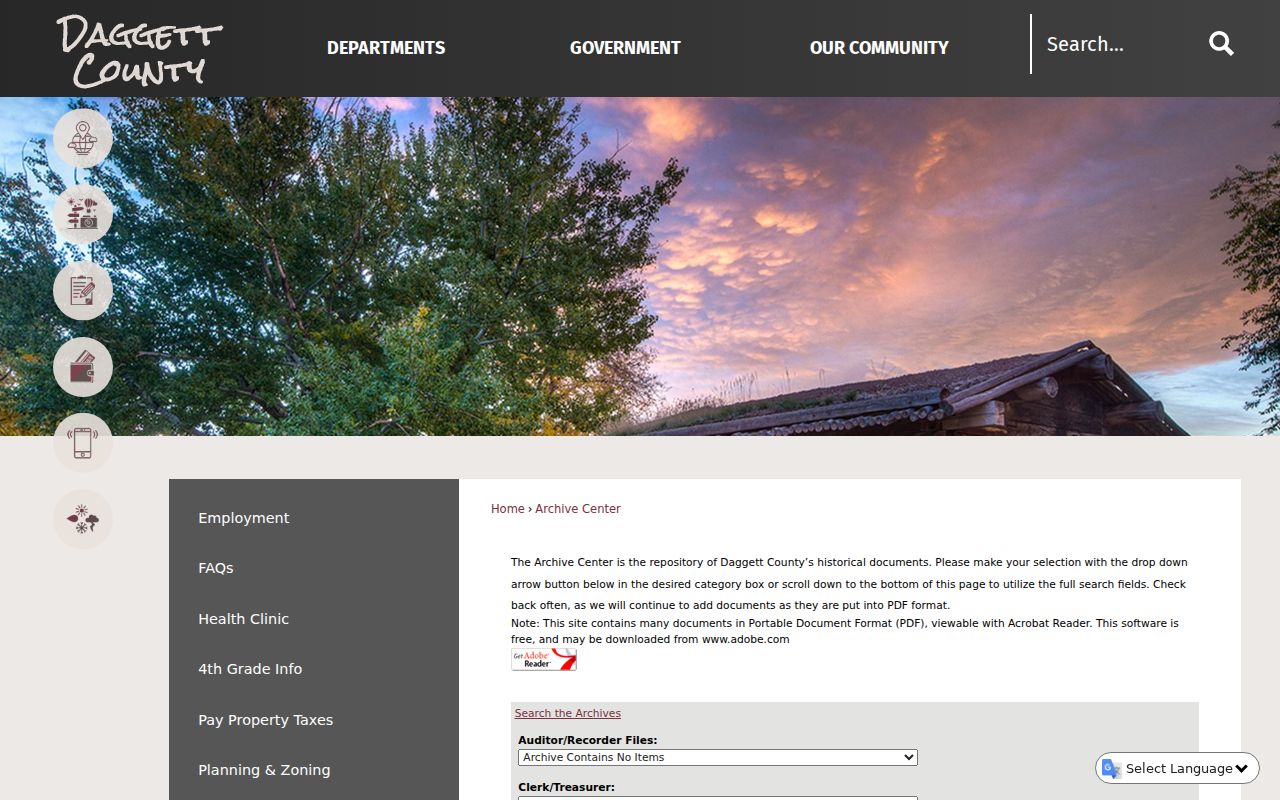
Think of the archive page as a map to where records live. It points to collections rather than listing every deed volume year by year, so confirm a specific holding with the office before you cite it.
Tracing Daggett County Former Owners Through Deeds
Every chain of title starts with the newest deed. In Daggett County, pull the most recent matching record and read four things: grantor, grantee, recording date, and legal description. The grantee then becomes your next search name in earlier deed records. Repeat that step backwards through the index. Compare the land description and instrument reference each time. One wrong turn is easy to take. A shared surname, a shortened entity name, or a changed mailing address can send you down the wrong branch of the chain. Only when every legal description points to the same parcel does the sequence truly document the successive former owners of record.
- Locate the latest deed for the parcel by grantee or full land description.
- Record its parties, filing date, instrument reference, and complete description.
- Search the prior grantor as a grantee in the earlier index, then match the land again.
- Repeat until the index or volume ends; ask the Recorder for the next historical route.
- Grantor and grantee
- The parties conveying and receiving an interest.
- Chain of title
- The sequence of instruments that links past interests in one property.
- Legal description
- The land wording that can be more stable than an old street address.
- Quitclaim deed
- A transfer of whatever interest the signer held; read its terms with the rest of the chain.
Daggett County Online Index Limit
Daggett County publishes no stated starting year for its online deed index. That gap matters. An empty search result does not prove a former owner or instrument is missing. The Recorder can check the grantor and grantee indexes. Tract, mortgage, and lien indexes are available too. The office can tell you whether a separate book, volume, or archive series carries the search further back.
The county's recorder page shows the office address, hours, and phone. Searching the index and pulling images happens through the office itself. The $45 recording charge covers filing a document, not ordering a copy. For copy requests, ask the Recorder for the current fee. The same goes for a certified deed. The Daggett County deed-records page walks through that single-document step.
Read the official Recorder index description before a counter search. It shows which records are on file.
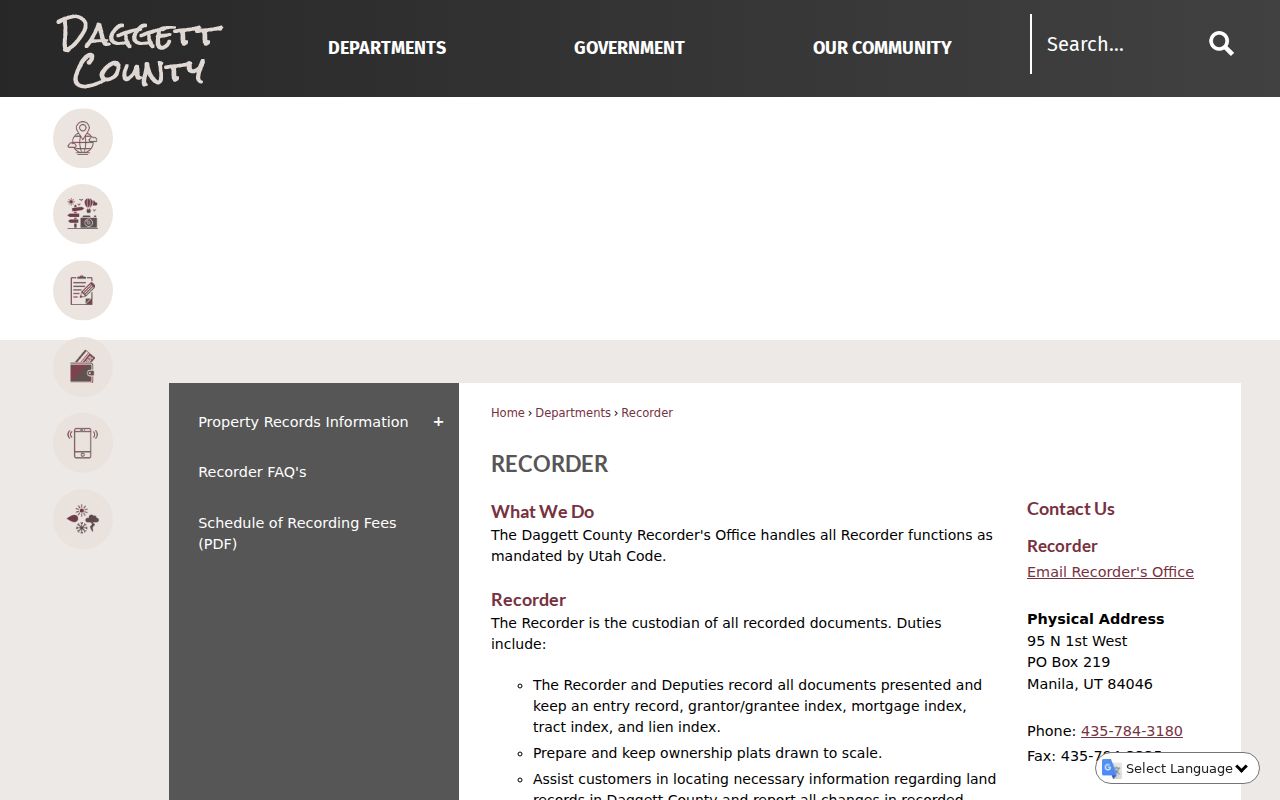
The Daggett County page confirms the index categories the Recorder keeps. How far back each one reaches online is a question for the office, so confirm year coverage before relying on the digital index alone.
Past Owners in Daggett County Estate Transfers
Estate transfers often skip the ordinary sale deed. A past owner may have died. An affidavit, court order, or estate deed then stands in place of a sale. The Utah Courts XChange information page explains public case access and its limits. The Daggett County Recorder indexes every recorded instrument. It sits alongside each deed in the parcel chain.
A death certificate alone proves nothing about ownership. It names no new owner of record. Read the court authority together with the recorded deed whenever title moves through an estate. Some probate case information stays private or redacted. Older converted cases can show less detail. XChange generally reaches electronic public court documents filed since July 1, 2010. Public courthouse terminals offer another route. The clerk can retrieve an archived file or a certified order when one is needed.
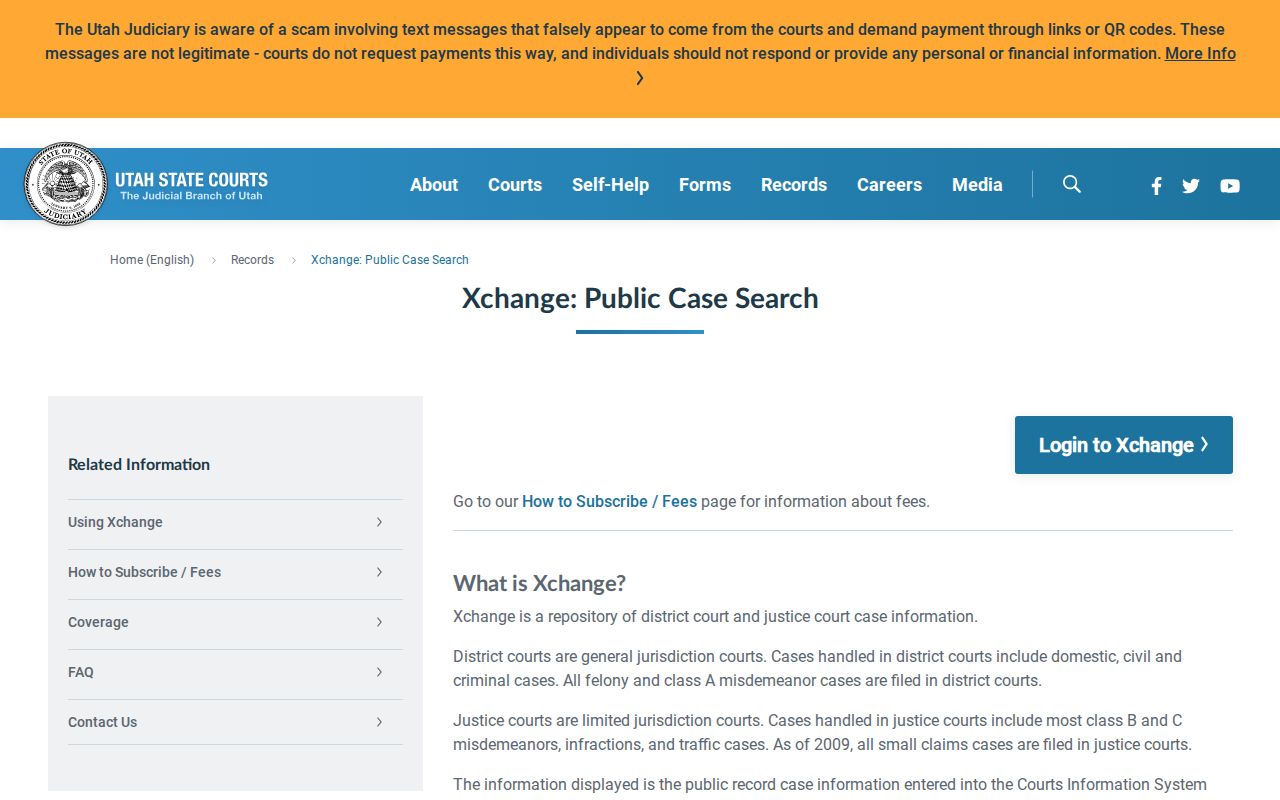
Expect a court order to explain an estate transfer. The Utah Courts XChange search is the live route into case records and, through them, the deed records behind a Daggett County parcel transfer.
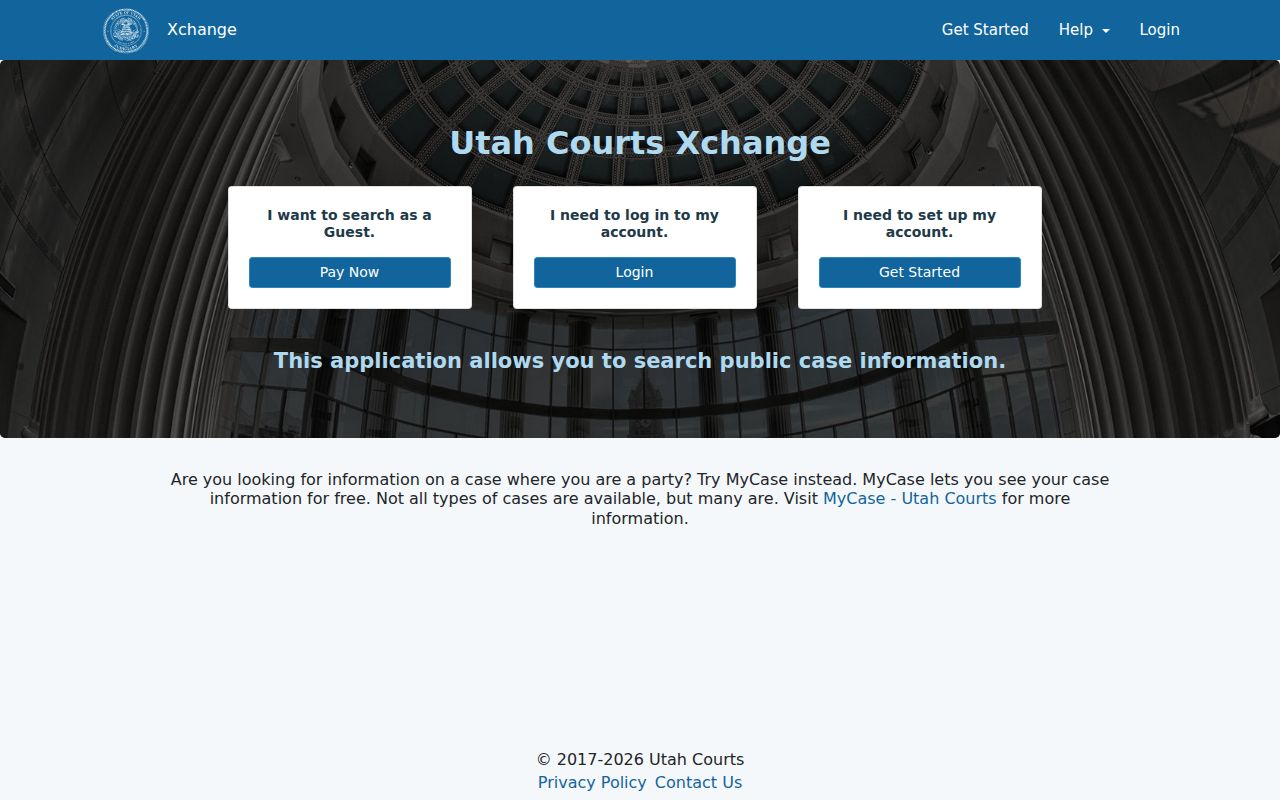
The live portal is the public search entry point. It displays the case search fields visitors use to trace an estate deed behind a Daggett County parcel transfer, though exact fields and document prices should be confirmed in the current interface.
Daggett County Name and Parcel Variants
Past owners often hide behind variant names. A Daggett County deed may list initials, a maiden name, a trust, an LLC, or an estate representative. Run each form through the property search. Never join two people by name alone. At every step, compare the legal description, the parcel or serial number, and the instrument date before trusting a match between two Daggett County deeds. The Recorder's tract index earns its keep when a common name pulls up several possible transfers.
Street names change too. A postal address can change while the land stays the same, and an old deed may not carry the current street name at all. Carry the full legal description forward. Note exceptions and lot references as well, and if a subdivision or lot adjustment changed the description, confirm the recorded plat that created the new parcel before continuing backward.
Daggett County Court-Date Clues
Utah district court records offer a second historical path. They matter most when a Daggett County deed chain breaks at probate, partition, quiet title, or a judgment affecting land. Most district courts moved to CORIS by 1998. XChange carries electronic public documents filed since July 1, 2010. Justice-court conversion dates vary. Older converted cases may hold fewer details.
Search the party or case, read the public docket and final order, then return to the Recorder's indexes for the instrument affecting the parcel. Sealed, expunged, juvenile, and several private domestic matters stay closed. An empty remote case search proves nothing about whether a deed existed.
Asking for the Next Daggett County Index
A chain may hit a missing year or an old paper volume. That calls for a direct request to the Recorder. Ask which index family and book come next. Include the last confirmed grantee and the prior grantor. Add the complete legal description, the latest recording reference, and the year range. Make the handoff precise. Staff can then tell a true gap from a different index route. Daggett's official page names its entry, grantor/grantee, tract, mortgage, and lien indexes. It publishes no online start year. Field-by-field search instructions are absent as well. Trace the last verified deed. Do not ask the office to search a bare name without parcel context.
For an archive series, ask whether a catalog entry names the relevant volume. Confirm who holds the original, the County Recorder or the State Archives. The archive selector is not a deed-by-year search tool. Settle custody and copy options before citing a specific historic transfer in Daggett County property records.
How Far Daggett Records Reach
The online recorder index never states its earliest year. The State Archives does confirm permanent retention. Its series keeps the County Recorder's grantor and grantee indexes forever. The description also covers deeds. It includes final judgments or decrees that partition land or otherwise affect title and possession. Treat the archival series as permanent, but verify the web subscription's date range directly before relying on it for any Daggett County deed.
Lawful use. Former-owner research in Daggett County can support property history, estate review, or purchase diligence. Do not use old names or addresses to track, harass, threaten, or harm a living person.